
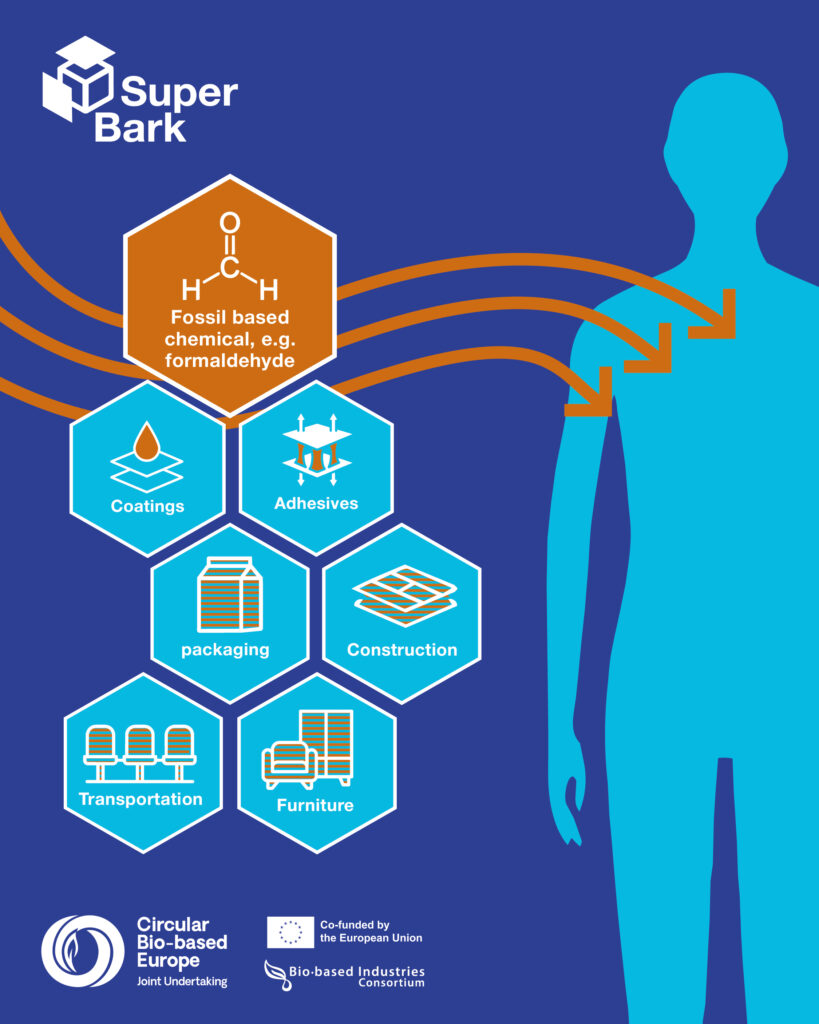
Today, most adhesives and coatings used in applications such as wood products, construction materials, furniture, and packaging are still based on fossil-derived chemicals. Many traditional formulations contain substances that have been associated with health concerns, including formaldehyde emissions. The infographic demonstrates how transitioning to bio-based solutions can significantly reduce these risks while supporting Europe’s circular bioeconomy ambitions.
Among the key findings highlighted are the substantial potential health benefits of replacing formaldehyde-based resins in wood adhesives. Studies indicate that tannin-based bio-adhesives can reduce human health impacts by around 50% compared with conventional formulations, while bio-based coating alternatives may reduce several health-related impacts by more than 30%. Estimates suggest that replacing formaldehyde and PFAS in relevant applications could generate billions of euros in avoided health-related costs across Europe.
To address these health and safety concerns, SuperBark is developing more than 95% bio-based adhesives and coatings from softwood bark. By extracting valuable polyphenols and producing bark-based cellulose nanofibrils, the project aims to replace hazardous chemicals in everyday products while following Safe and Sustainable by Design principles. The resulting materials are being developed for applications in wood adhesives, coatings, and barrier coatings for paper-based packaging.
Through this infographic, the consortium seeks to raise awareness of the broader societal benefits of bio-based materials, including improved consumer and worker safety, and healthier indoor environments.