
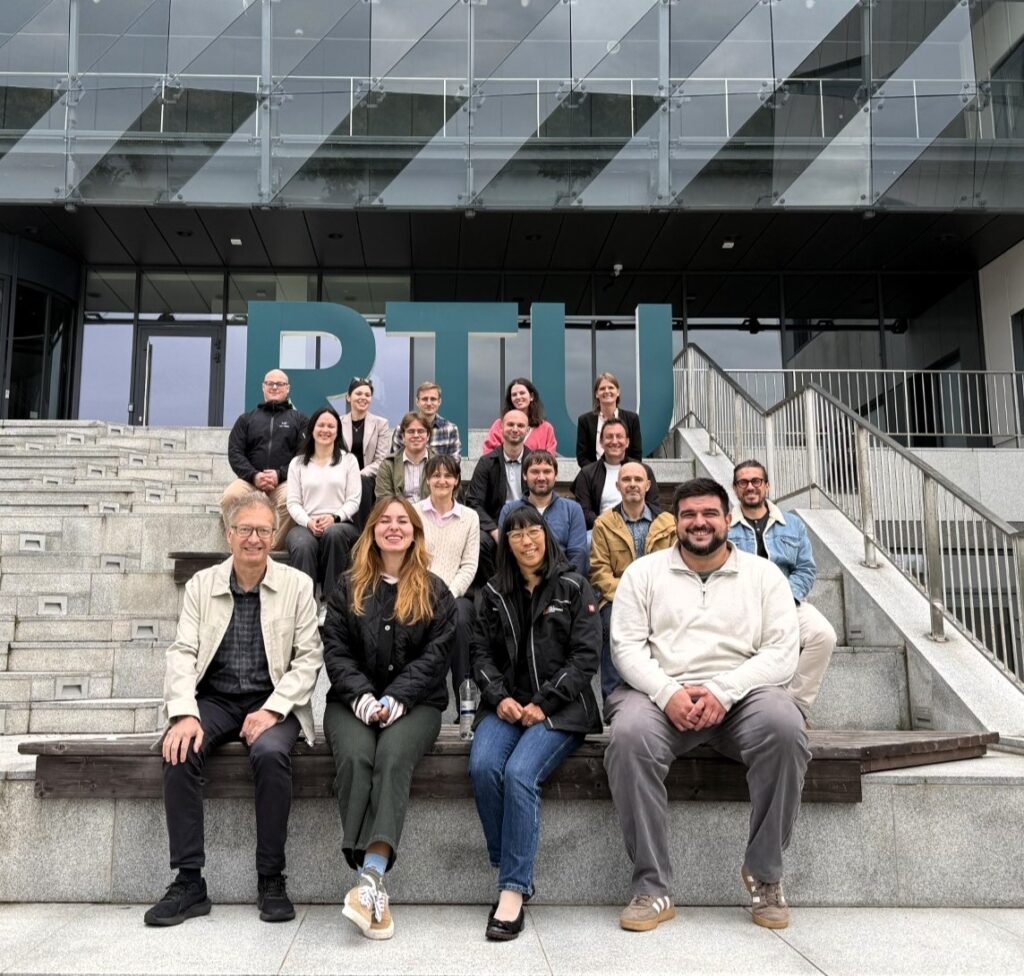
The SuperBark consortium met at Riga Technical University to advance the collaborative development of over 95% bio-based adhesives and coatings from softwood bark.
Significant Progress Across Research Activities
SuperBark, the four-year initiative developing sustainable adhesives and coatings from softwood bark funded by the Circular Bio-based Europe Joint Undertaking (CBE JU) met for its seventh consortium meeting at Riga Technical University’s Institute of Energy Systems and Environment (RTU VASSI). During the two-day meeting, the consortium reviewed advances made across the project’s work packages, demonstrating continued progress in developing sustainable alternatives to fossil-based adhesives and coatings from softwood bark.
Recent work on bark fractionation and extraction has delivered promising results, including the successful production of significant quantities of polyphenols from spruce and Calabrian pine bark. Researchers reported that alkaline extraction methods achieved notably higher polyphenol yields than conventional hot water extraction approaches, providing valuable insights for future scale-up activities.
Towards Sustainable Industrial Applications
Researchers reported progress in the optimization of polyphenol-based adhesive formulations for plywood, particleboard, and medium-density fibreboard (MDF), with recent work focusing on improving adhesive performance, understanding scale-up challenges, and advancing formulations that combine bark-derived polyphenols with other bio-based components.
Partners presented progress in developing fully bio-based coating solutions designed to meet demanding industrial requirements, including abrasion resistance, scratch resistance, and hardness, gaining positive feedback from industry stakeholders. Testing on paper applications is also progressing, with promising results supporting the performance and sustainability of bio-based coating formulations.
Sustainability Assessments Confirm Positive Environmental Performance
Further, initial Life Cycle Assessment results demonstrated that SuperBark’s bark-derived polyphenols could achieve significantly lower climate impacts than conventionally produced tannins, while several bio-based adhesive formulations showed environmental performance comparable to or better than fossil-based reference products. At the same time, initial Techno-Economic Assessment results show that the integration of bark valorisation processes into existing pulp and wood-processing industries could create economically viable pathways for producing both polyphenols and cellulose nanofibrils.
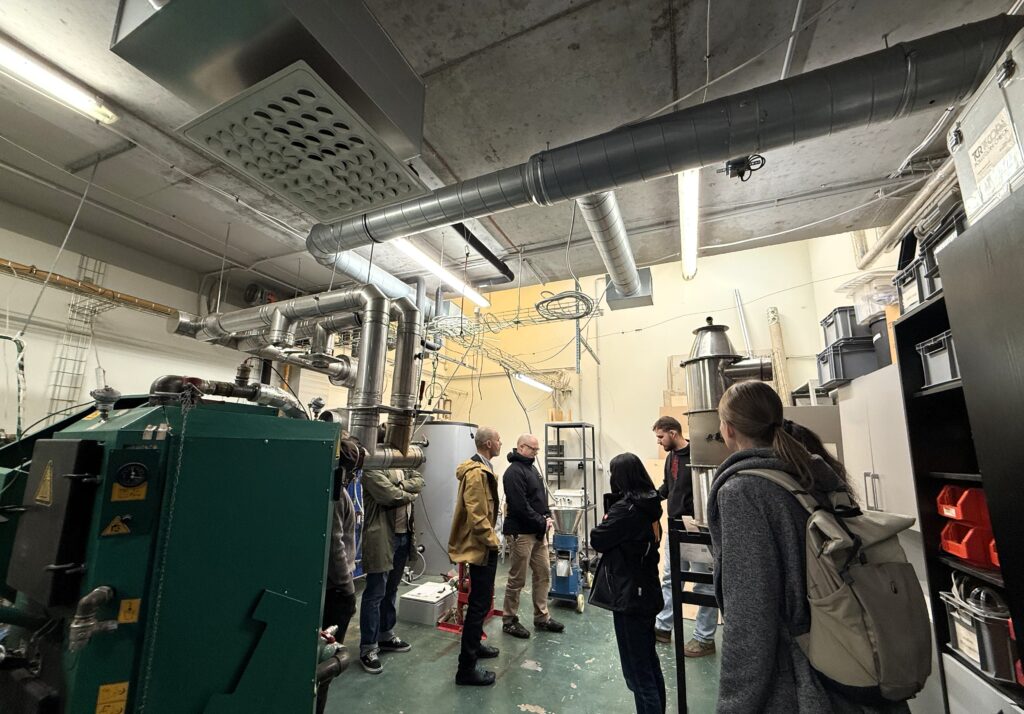
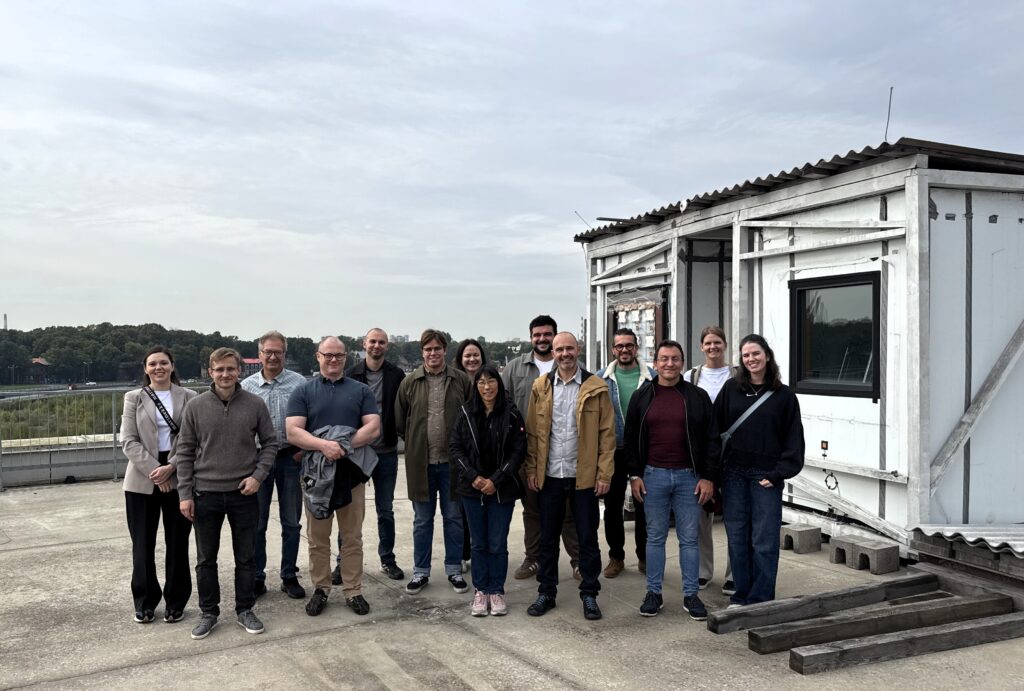
SuperBark consortium touring the RTU VASSI research and testing facilities.
Exploring RTU VASSI’s Research and Innovation Facilities
In addition to the project discussions, consortium members visited several of RTU VASSI’s research and innovation facilities. The tour showcased laboratories and research environments supporting sustainable energy, bio-based materials, and environmental technologies. Partners learned about RTU VASSI’s work in areas such as renewable energy, bioenergy, energy efficiency, environmental impact reduction, and system modelling, which are brought together under the university’s Energy and Environment research platform. The visit also included wood materials testing facilities as well as collaborative spaces that support student innovations.
For more information about the work of RTU VASSI in SuperBark, please contact Leading Researcher Ilze Vamža at ilze.vamza@rtu.lv.